

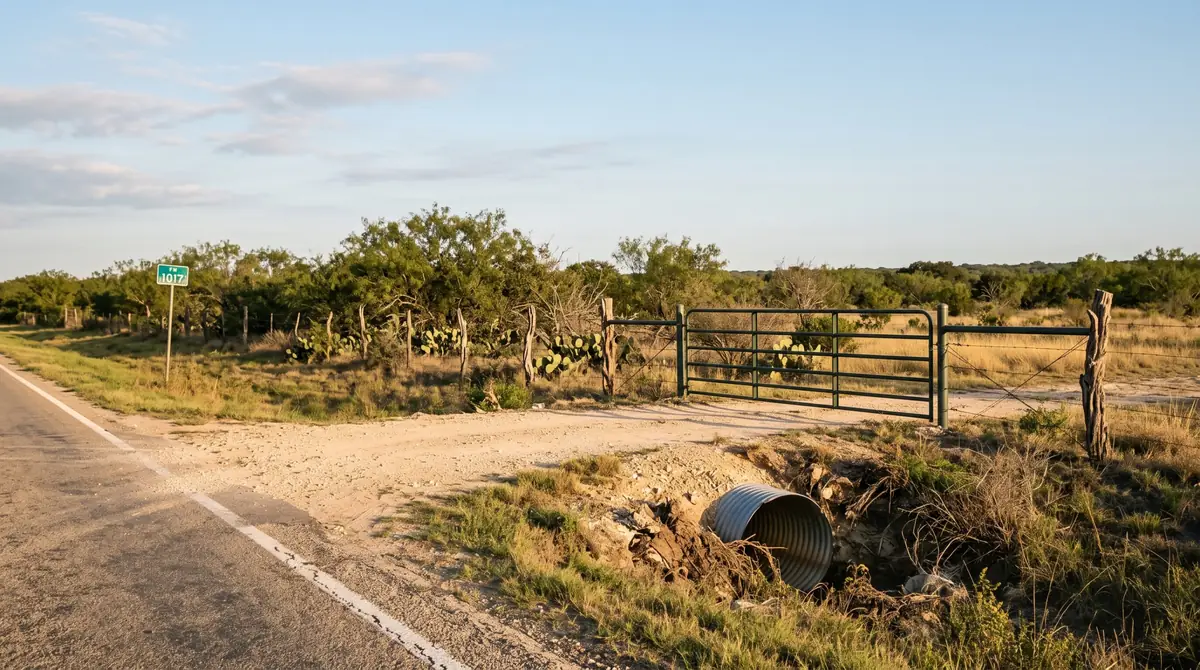
A listing that says “300 feet of road frontage” sounds like access is handled. In a lot of cases it is. But road frontage only tells you that the property touches a road. It doesn’t tell you whether you can actually pull off that road, where an entrance can go, or what it will cost to build one.
For rural land buyers in Texas, this is one of the most overlooked details in the buying process. On smaller tracts, where the driveway can go often decides where everything else goes, including the house, the septic system, the well, and the barn. Here’s what to look at before you buy.
Access Basics
Why Road Frontage and Usable Access Are Not the Same Thing
When you look at a plat or an aerial map, it’s easy to see a road touching the property line and assume you can drive in anywhere along it. In reality, several things can limit or block an entrance.
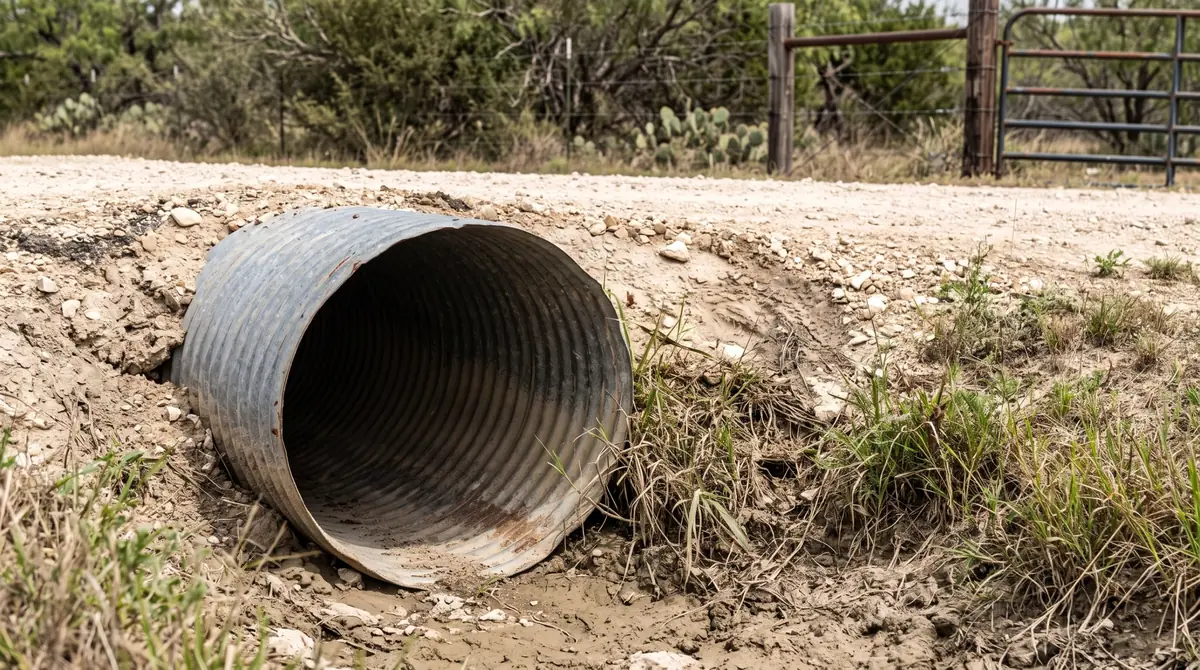
Drainage Ditches and Culverts
Most rural roads in Texas have a bar ditch along the side. To cross it, you’ll usually need a culvert, and many counties require a permit and set the culvert size and installation standards. The landowner typically pays for the materials and installation and is responsible for maintaining it afterward.
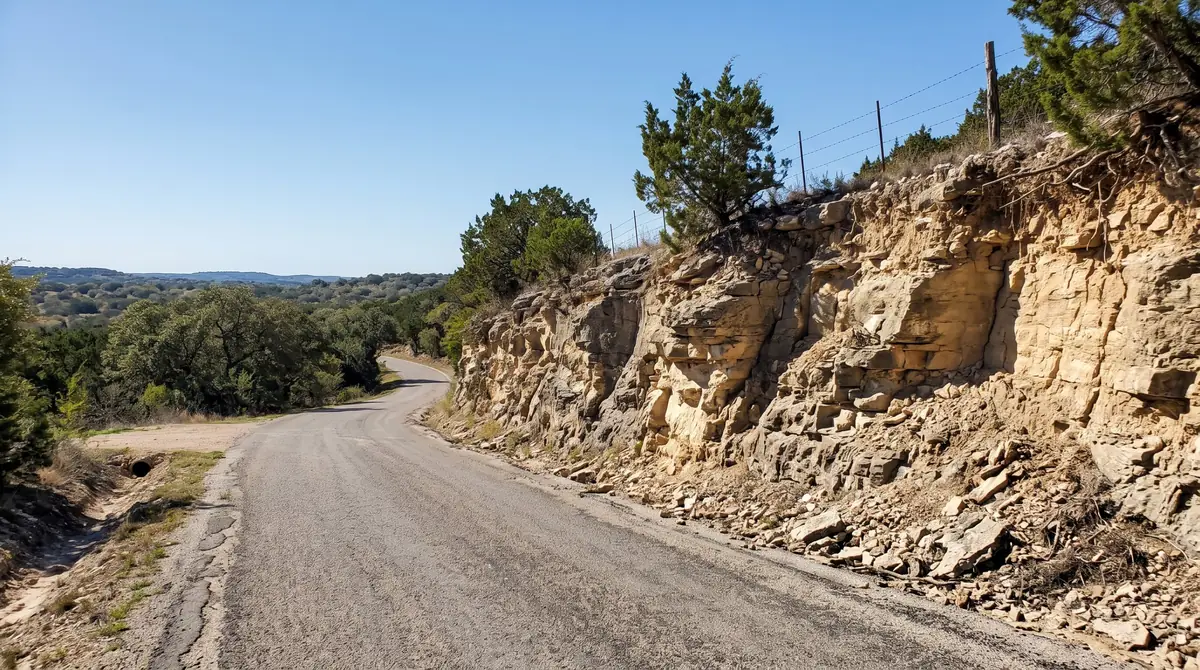
Steep Slopes and Cut Banks
In the Texas Hill Country especially, the road may sit well above or below the property. A steep cut bank or drop-off can make an entrance impractical or expensive to grade.
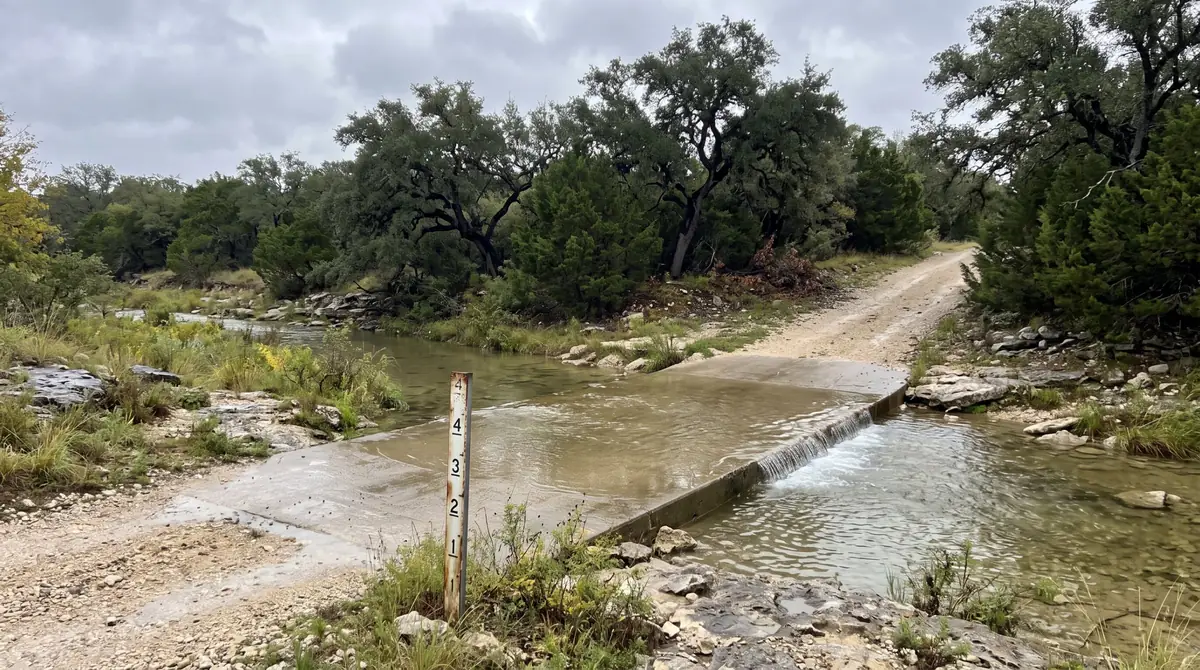
Creeks, Draws, and Low-Water Crossings
If a creek or draw runs between the road and the usable part of the property, you may need a crossing just to reach your building site. Low-water crossings can flood and leave you without access after heavy rain.
Curves, Hills, and Sight Distance
An entrance on a blind curve or just over a hill can be a safety problem. On state highways, TxDOT reviews driveway locations, and a spot that looks fine on a map may not be where the road authority wants your entrance.
Permits
Who Approves Your Driveway in Texas?
It depends on who maintains the road.
State Highways and FM Roads
If the property fronts a state highway, US highway, or Farm-to-Market road, you’ll need a permit from the local TxDOT district office before building a driveway in the right of way. The application is TxDOT Form 1058. Work can’t start until the permit is approved, and TxDOT inspects the finished driveway. Drainage is part of the review, so a culvert may be required.
County Roads
For county-maintained roads, the county typically issues the driveway or culvert permit. Requirements vary by county, so call the county road and bridge department or development services office before you buy and ask what they require.
Private Roads and Access Easements
Many Texas ranches are reached by a private road or an access easement instead of public road frontage. Toro Creek Ranch, for example, is reached by a fenced easement off CR 103. Before you buy, ask:
- Is the easement recorded, and does it run with the land?
- How wide is it, and does it allow utilities as well as access?
- Who maintains the road, and is there a written maintenance agreement?
- Are there gates, and who holds the keys or codes?
- Is it an all-weather road, or does it wash out?
A title commitment and survey should show recorded easements. Have your title company or attorney review them before closing.
Site Planning
On Smaller Tracts, the Driveway Decides the Site Plan
On a large ranch you usually have room to work around problems. On a 5, 10, or 20 acre tract, the entrance location can lock in the rest of your layout. Texas septic rules (TCEQ Chapter 285) set minimum distances between septic components and other features. A few examples:
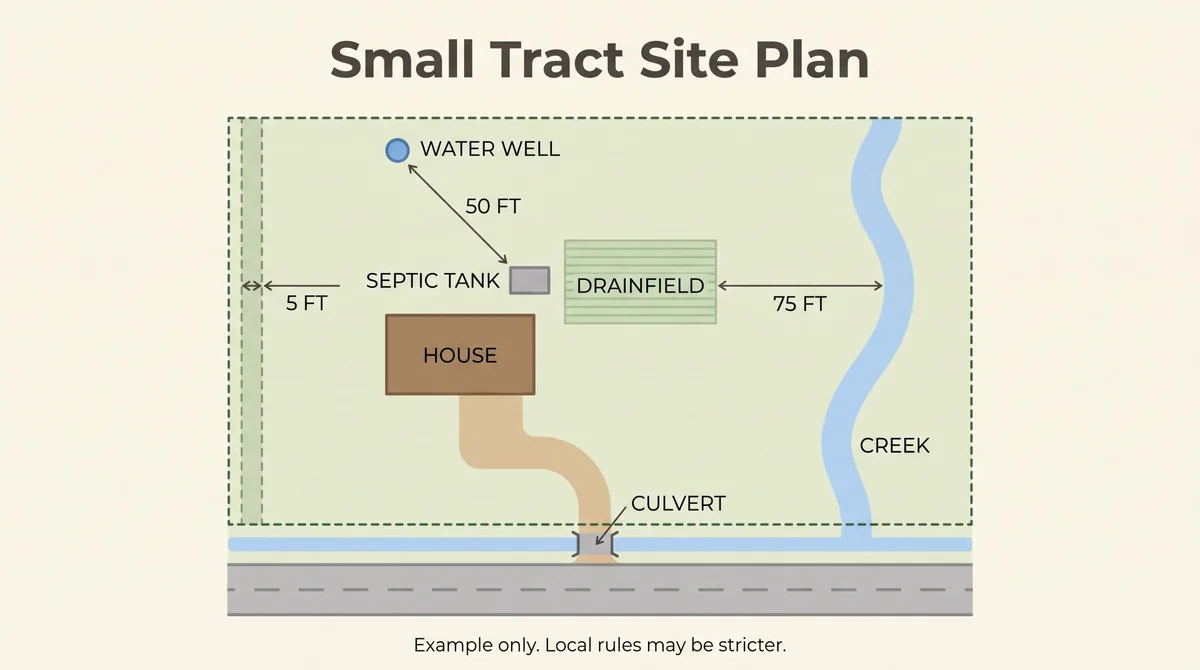
Add the driveway, the house, the well, and the space between all of them, and a narrow or oddly shaped tract can run out of room fast. Local rules can be stricter, so check with the county or local authority that permits septic systems.
Buyer Checklist
Questions to Ask Before You Buy Rural Land
Before you make an offer, get clear answers to these.
- Who maintains the road the property fronts: TxDOT, the county, or a private owner or association?
- Will the road authority approve an entrance, and where?
- Is a culvert required, and what size?
- Is there already a permitted entrance, or will you need a new one?
- If access is by easement, is it recorded, how wide is it, and who maintains it?
- Does the terrain between the road and your building site allow a practical driveway?
- Is any part of the access route in a floodplain or low-water crossing?
- Is electricity available along the road, or will you need a line extension?
- Where can a septic system go once the driveway and house are placed?
Before You Close
Walk the Land Before You Close
Maps and listing photos can’t show you a 6-foot cut bank, a washed-out crossing, or a culvert that’s too small. The best way to understand access is to walk the property, drive the route in, and look at where an entrance would realistically go.
Our team knows South Texas and Hill Country land, and we’ll help you look at access, easements, utilities, and layout before you commit.
FAQ
Frequently Asked Questions
Does road frontage guarantee access to a property in Texas?
No. Road frontage means the property touches a road. Whether you can build a driveway depends on permits from TxDOT or the county, drainage, terrain, and safety factors like sight distance.
Do I need a permit to build a driveway on a state highway in Texas?
Yes. You need a permit from the local TxDOT district office using Form 1058 before building a driveway in the state highway right of way.
Who pays for a culvert under a rural driveway?
In most cases the property owner pays for the culvert and its installation and is responsible for maintaining it. The county or TxDOT may set the size and installation standards.
What should I check if a property has access by easement?
Confirm the easement is recorded, how wide it is, whether it allows utilities, who maintains the road, and whether there are gates. Your title commitment and survey should show it.
Can the driveway location affect where I put my septic system?
Yes. Texas septic rules require minimum distances from property lines, wells, water features, and structures. On smaller tracts, the driveway location can limit where the house and septic system fit.
This article is general information, not legal advice. Permit and septic rules vary by county and road authority, so confirm requirements locally before you buy.